Drones could replace him one day, but not yet, says Wimbledon’s hawk handler
Despite advances in drone technology, Wimbledon's hawk handler Donna Davis says machines still can't replicate the effect a real predator like Rufus has on birds.
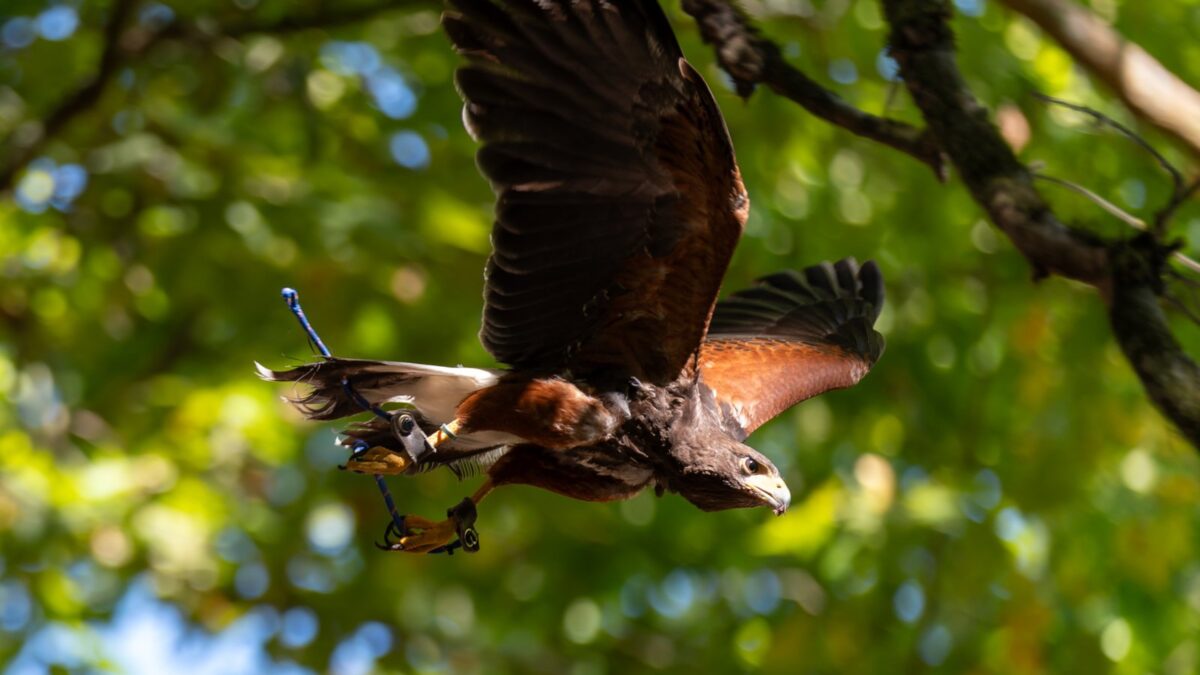
Although advances in drone technology have prompted discussions about whether machines could eventually take over bird-control duties at Wimbledon, handler Donna Davis believes technology still has a long way to go before it can replace Rufus, the tournament’s resident Harris’s hawk.
Speaking to the BBC, Davis explained that while engineering has become increasingly sophisticated, birds respond very differently to a real predator than they do to an artificial one. For now, nature remains the most convincing deterrent for keeping pigeons and other birds off the All England Club’s famous grass courts.
Rufus doesn’t chase or attack the birds he encounters; his presence alone is enough, since birds instinctively recognise a Harris’s hawk as a natural predator. He has patrolled the grounds since 2008, flying every morning around 4 a.m. BST, well before players begin practising and fans arrive.
Birds can damage carefully maintained lawns, leave droppings on the courts and even interrupt play at crucial moments, which is why Wimbledon has stuck with a living solution rather than loud deterrents or modern gadgets for nearly two decades.
Image: Wikimedia Commons/by Jules Verne Times Two


Leave a Reply