‘Habit is the real prize’: inside India’s fight for 60 million quick-commerce wallets
Analysts say India's quick-commerce store-building spree is really a battle for the daily spending habits of 50-60 million shoppers.
Behind India’s quick-commerce store-opening spree lies a simpler goal, according to industry analysts: owning the daily habit of the country’s biggest-spending shoppers, not just the delivery map.
Datum Intelligence founder Satish Meena said the rapid expansion by Amazon and Flipkart in particular isn’t only about chasing quick-commerce profits — it is also about protecting their much larger e-commerce businesses. ‘Habit is the real prize. It is about the top 50-60 million wallets and about which app owns their daily habit,’ Meena said.
That fight has translated into a striking build-out of physical infrastructure. Estimates from equity research firm Bernstein show the five largest operators added nearly 900 dark stores between April and July this year. Eternal-owned Blinkit added 289 stores to reach 2,511 in total, Walmart-owned Flipkart Minutes added 262 to reach 1,003, and Amazon Now added an estimated 250 stores, nearly doubling its network to 600-700 locations. The Amazon and Flipkart-backed platforms alone made up more than half of all new stores opened across the industry.
Zepto, which is preparing for an IPO, added 90 stores to reach 1,345, while Swiggy Instamart’s footprint held steady at 1,187. Combined, the five companies ran 6,650 to 6,750 dark stores by July, up from 5,750 to 5,850 three months earlier — yet the number of unique pin codes served grew by only 152, to 2,722.
That gap between store count and geographic reach is most visible in metro cities, which Bernstein estimates can profitably support around 3,600 dark stores but which currently hold closer to 4,300. All five companies operated in the same metro pin code just 26% of the time in April; by July, that overlap had risen to 44%, reflecting how concentrated the competition for those top-spending wallets has become.
Angshuman Bhattacharya, partner and national leader for consumer product and retail at EY-Parthenon India, said a pin code can span 8-10 sq km, so companies often need denser networks simply to meet delivery-time promises and improve order economics — a build-out that may leave newer entrants with a longer path to profitability even as they chase the same loyal shoppers.
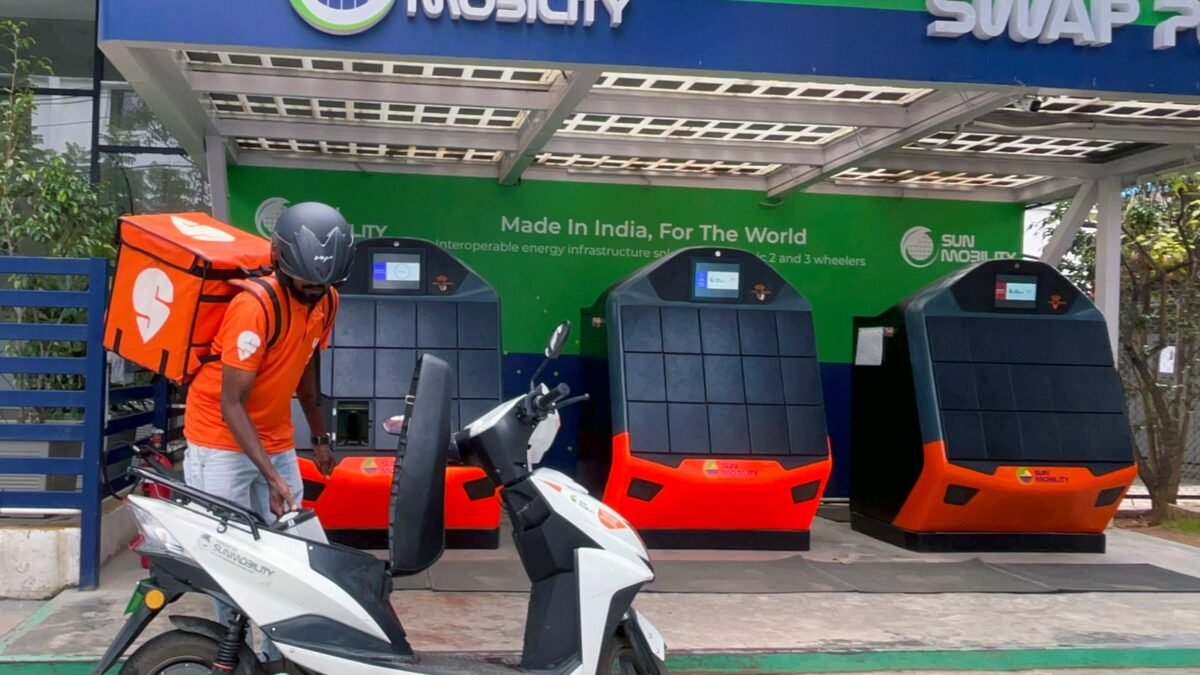
Image: Wikimedia Commons/by SUN Mobility



Leave a Reply