His father and 2 brothers died of disease, so he vowed to cure it
After tropical sprue killed his father and two brothers, Yellapragada Subbarow dedicated his life to medical research, later helping develop treatments for cancer, infections and more.
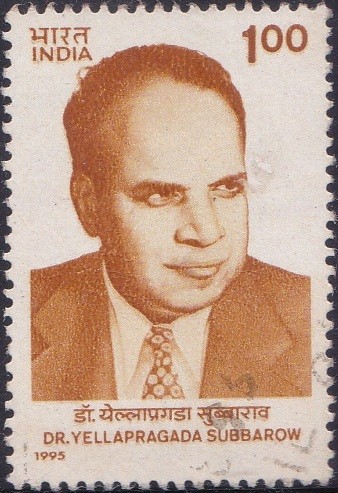
Yellapragada Subbarow’s father, a Sanskrit scholar, died when Subbarow was young after suffering from tropical sprue, a disease that was poorly understood at the time. Two of his brothers also succumbed to illness. Those losses left a lasting impression and fuelled his determination to study medicine.
Born in 1895 in Bhimavaram, in present-day Andhra Pradesh, Subbarow’s academic path was far from smooth. He failed his school examinations twice before passing on his third attempt, and financial constraints made higher education difficult until his future father-in-law helped him buy medical textbooks.
In 1922, Subbarow travelled to the United States with limited resources but a clear ambition to pursue research that could improve human health. At Harvard Medical School, he worked with biochemist Cyrus Fiske to develop the Fiske-Subbarow method for estimating phosphorus in biological samples, still used in laboratory medicine today.
After joining Lederle Laboratories in 1940, Subbarow’s research on folic acid established why the vitamin is recommended during pregnancy worldwide, and led to aminopterin, one of the earliest drugs to induce remission in childhood leukaemia, later giving rise to methotrexate. He also contributed to the discovery of Aureomycin, the first tetracycline antibiotic, and diethylcarbamazine, still used against elephantiasis.
Subbarow died in 1948 at the age of 53, having never received a Nobel Prize. His journey from a grieving childhood to some of medicine’s most enduring breakthroughs continues to be taught as a story of perseverance.
Image: Wikimedia Commons



Leave a Reply