Greenland Sharks Were Never Blind, UC Irvine Study Finds — And Their Eyes Could Help Treat Human Vision Loss
A UC Irvine study overturns the long-held belief that Greenland sharks are blind, finding their retinas stay intact for centuries — with possible lessons for human eye disease.
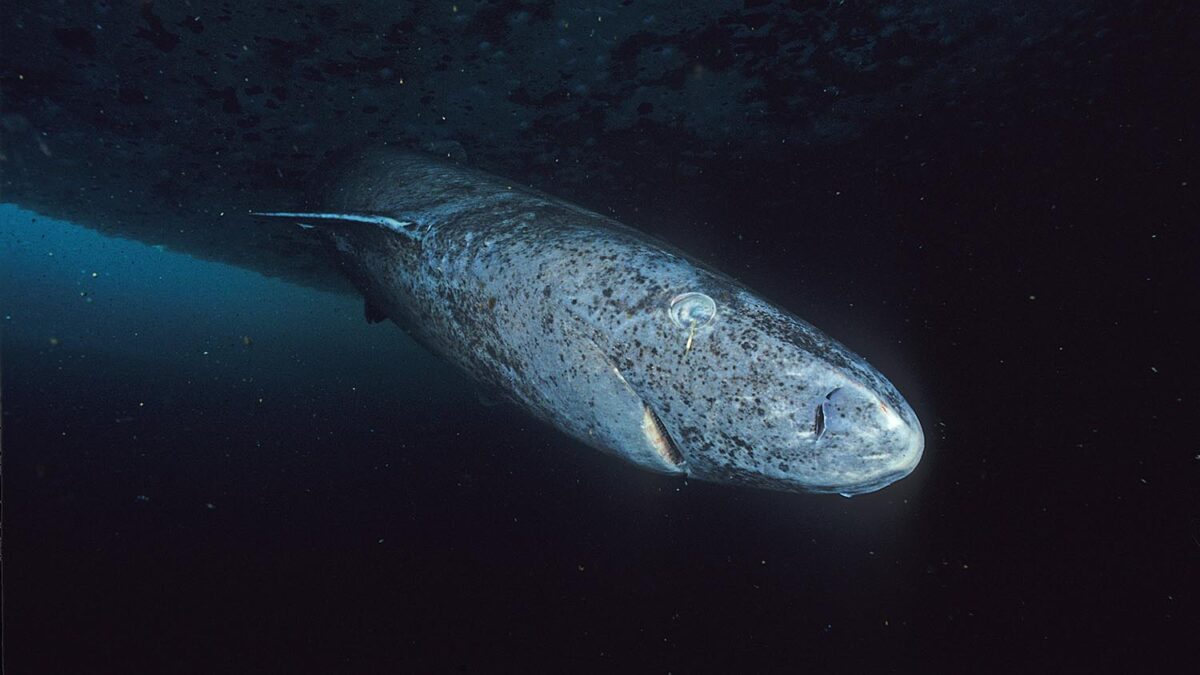
A long-held scientific assumption has been overturned: Greenland sharks, long believed to be functionally blind, may actually see just fine well into old age, according to a new study from the University of California, Irvine.
The sharks live in the pitch-dark waters of the Arctic and often have cloudy eyes with parasites dangling from the cornea, which led researchers to assume their vision was largely gone. That changed when Dorota Skowronska-Krawczyk, an associate professor at UC Irvine, watched video footage of a shark drifting through dark water and noticed it tracking the light with its eyeball — a behaviour that shouldn’t occur in a blind animal.
To dig deeper, researchers collected Greenland sharks near Disko Island in Greenland between 2020 and 2024 and sent preserved eye tissue to Skowronska-Krawczyk’s lab. PhD student Emily Tom examined the samples and found no evidence of cell death in the retina, while rhodopsin, the protein needed for vision in dim light, remained fully functional and tuned to detect blue light, which penetrates deepest underwater.
The results were published in Nature Communications under the title ‘The visual system of the longest living vertebrate, the Greenland shark,’ with University of Basel researchers Walter Salzburger and Lily G Fogg contributing the evolutionary analysis. The study points to a DNA repair mechanism that appears to protect the shark’s retina from age-related damage over its centuries-long lifespan.
The findings matter for humans because the eye is often one of the first organs to show signs of ageing, contributing to conditions such as macular degeneration and glaucoma. Skowronska-Krawczyk says long-lived animals like the Greenland shark offer a rare natural experiment in how tissue resists ageing — one that could eventually point toward new treatments for human vision loss.



Leave a Reply